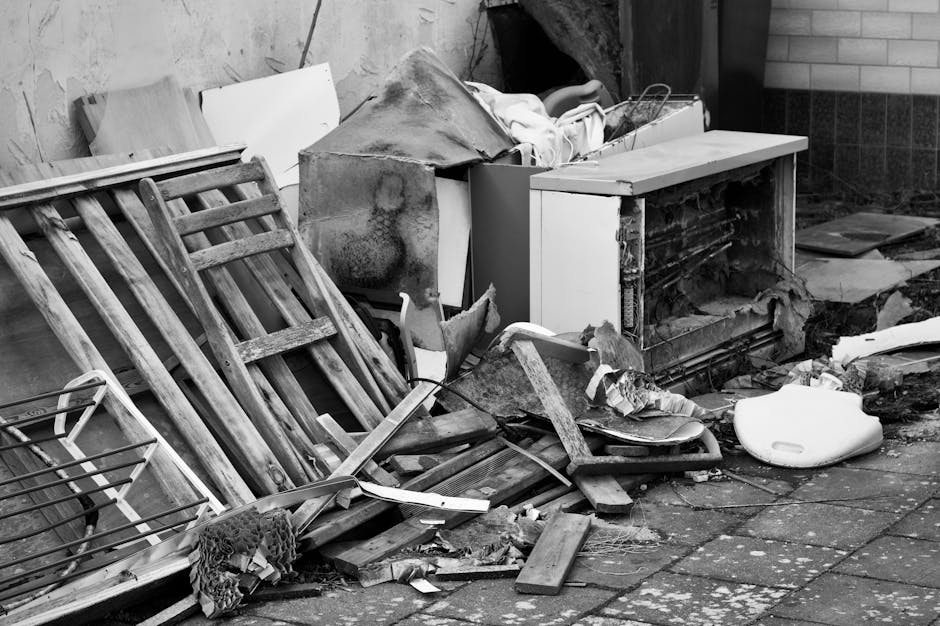
Hunton Bridge Bulky Rubbish Removal Advice Abbots Langley
If you are staring at an old sofa, a broken wardrobe, garden waste, or a pile of mixed household clutter and thinking, "Right, where do I even start?", you are in the right place. This guide to Hunton Bridge bulky rubbish removal advice Abbots Langley breaks the process into plain English, with practical steps that help you clear space without creating extra stress, extra mess, or awkward last-minute surprises.
Hunton Bridge sits in that everyday grey area where people need a solution that is quick enough to be convenient, but careful enough to be done properly. Whether you are clearing a garage, dealing with renovation leftovers, or sorting out a move, bulky items need more than a bin bag and a hopeful shrug. Let's face it, most of us can manage a few boxes. It is the mattress, the heavy shelving unit, the damp carpet roll, or the cracked appliances that cause the real headache.
This article walks you through what bulky rubbish removal actually involves, how to plan it well, what to avoid, and when a professional clearance service can save you time and hassle. If you want a broader look at related clearance options, you may also find the information on general waste removal and home clearance useful.
Table of Contents
- Why Hunton Bridge bulky rubbish removal advice Abbots Langley Matters
- How Hunton Bridge bulky rubbish removal advice Abbots Langley Works
- Key Benefits and Practical Advantages
- Who This Is For and When It Makes Sense
- Step-by-Step Guidance
- Expert Tips for Better Results
- Common Mistakes to Avoid
- Tools, Resources and Recommendations
- Law, Compliance, Standards, or Best Practice
- Options, Methods, or Comparison Table
- Case Study or Real-World Example
- Practical Checklist
- Conclusion
- Frequently Asked Questions
Why Hunton Bridge bulky rubbish removal advice Abbots Langley Matters
Bulky rubbish is not just "more rubbish". It is usually awkward rubbish. Things like wardrobes, chest freezers, broken desks, old mattresses, garden sleepers, bathroom fittings, and renovation offcuts tend to be heavy, hard to stack, and annoying to move. One item can turn into a proper logistical job, especially if it is tucked in a loft, upstairs flat, garage, or narrow hallway.
That matters for a few reasons. First, bulky waste can block access and make a property feel untidy or unsafe. Second, if you leave it sitting around, the job usually gets larger in your head than it really is. And third, not every item can go into ordinary household disposal channels without some planning. In practical terms, a little advice upfront can prevent a lot of backtracking later.
In Hunton Bridge and the wider Abbots Langley area, people often need a clearance approach that suits a busy family home, a landlord turnaround, a renovation project, or an end-of-tenancy clean-up. A well-planned clearance also helps you separate what can be reused, what should be recycled, and what needs special handling. That is where a tidy, sensible process really pays off.
Expert summary: bulky rubbish removal works best when you sort items early, check what needs special handling, and decide whether you need a simple one-off pickup or a broader clearance service.
How Hunton Bridge bulky rubbish removal advice Abbots Langley Works
At its simplest, bulky rubbish removal is the collection and disposal of larger items that are too big, heavy, or awkward for standard household disposal. Depending on the job, it may involve a single item, a small load, or a full property clearance. The process usually starts with identifying what you have, then deciding what should be kept, donated, recycled, dismantled, or removed.
A sensible clearance plan normally follows a few clear stages:
- Assess the waste - make a quick list of all the bulky items, including anything hidden in cupboards, sheds, or loft spaces.
- Separate the contents - group reusable items, recyclable materials, and true waste.
- Check access - think about stairs, tight corners, parking, and whether items need to be dismantled.
- Choose the right service level - single-item pickup, part-load clearance, or a more complete house, garage, loft, or office clearance.
- Book and prepare - clear a safe route, label anything to keep, and make sure nothing valuable is mixed in by mistake.
Some people want a straightforward collection for one bulky item. Others need a broader service, especially when the clutter includes furniture, garden waste, white goods, and mixed junk. If your project is larger, a structured service such as garage clearance, loft clearance, or house clearance may be more efficient than piecemeal removal.
One thing people often miss: bulky waste is not only about volume. Weight, awkward shape, and access matter just as much. A flat-pack wardrobe might be light in theory, but when it is half-assembled and wedged in a stairwell, it suddenly becomes everyone's problem.
Key Benefits and Practical Advantages
Good bulky rubbish removal advice is about more than getting rid of stuff. It helps you make cleaner decisions and avoid the sort of clearance mistakes that turn a one-hour job into a whole weekend.
- More space, quickly - once the heavy items are out, rooms feel usable again.
- Less lifting risk - heavy furniture and appliances can be awkward, especially on stairs or uneven ground.
- Better sorting - you can separate items for reuse, recycling, or disposal instead of treating everything the same.
- Fewer delays - planning access and item sizes properly means the job is less likely to stall halfway through.
- Cleaner results - a proper clearance leaves the property ready for sale, rent, renovation, or normal living.
There is also a quieter benefit that people appreciate only after the dust settles: peace of mind. The room looks calmer. The hallway feels wider. You can breathe again. Sounds simple, but that matters.
If you are clearing out household furniture, it may help to look at related services such as furniture clearance or furniture disposal so you can match the approach to the type of items you have.
Who This Is For and When It Makes Sense
Bulky rubbish removal in Hunton Bridge makes sense for a wide range of situations. It is not just for big renovations or full house moves. In day-to-day life, clutter builds quietly. Then one day the garage will not shut properly, or the spare room becomes a storage room by accident. Happens all the time.
This kind of clearance is especially useful for:
- homeowners clearing old furniture, appliances, or general clutter
- landlords preparing between tenancies
- tenants who need to leave a property in good order
- families doing a seasonal clear-out or pre-move sort
- people finishing a loft, garage, or garden project
- small businesses needing office furniture or equipment removed
- builders and trades handling leftover materials after works
It also makes sense when you have items that are too large for standard collection, or when the job is too awkward to handle alone. A damaged wardrobe in a cramped hallway is a perfect example. Technically removable, yes. Pleasant? Not really.
If your bulky waste is mixed with renovation debris, a dedicated builders waste clearance approach may be better than a general tidy-up. If the issue is business-related, business waste removal may fit more neatly.
Step-by-Step Guidance
A practical bulky rubbish removal plan does not need to be complicated. It just needs to be honest about the amount of work involved. Here is a simple way to handle it.
- Walk the property slowly
Look in the obvious places first, then check the awkward spots: behind doors, under stairs, in sheds, at the back of the garage, and up in the loft. You will often find at least one item you forgot existed. - Make a short item list
Write down what needs removing. Keep the wording simple: "2-seater sofa", "broken freezer", "4 shelving units", "bagged garden waste". This helps if you are comparing service options or requesting a quote. - Separate keep, sell, donate, recycle, and remove
This step saves money and reduces waste. A sturdy chair may be reusable even if the cushions are worn. A scratched table might still be useful elsewhere. Not everything needs to be dumped. - Check for awkward or restricted items
Mattresses, gas appliances, fridges, large mirrors, and items containing sharp glass or loose parts may need more care. If something looks unstable, treat it that way. - Prepare access routes
Move smaller items out of the way, unlock gates, clear stairs, and make sure there is enough room to lift safely. If parking is tight, plan that early. It sounds obvious, but people forget it every single day. - Choose a service that fits the job
For smaller loads, a targeted pickup may be enough. For a full room or property, a larger service is usually better value and less disruptive. - Confirm what happens next
Ask how items will be handled, what is accepted, and whether any items need to be separated beforehand. A five-minute clarification now can save a lot of faff later.
If the job involves a loft full of mixed items, it may be worth combining this with loft clearance. Likewise, if your clutter is mostly furniture, a dedicated furniture service can be simpler than treating it as generic waste.
Expert Tips for Better Results
Here is the part people tend to appreciate most: the small details that make the work easier. In our experience, these are the things that improve both efficiency and the final result.
- Measure the biggest item first - especially if it has to pass through a narrow door, stairwell, or loft hatch.
- Dismantle only what helps - some items are easier to move in parts, but over-dismantling can slow everything down.
- Keep screws and fittings in labelled bags - useful if anything is being reused or moved elsewhere.
- Group similar items together - it makes loading and sorting much quicker.
- Place fragile or sharp items separately - glass, metal edging, and broken frames should not be buried in a mixed pile.
- Leave a clear walkway - even a small clear path can make a huge difference on the day.
- Take photos if the load is unusual - this helps avoid confusion about item size or volume.
Small tip, but a useful one: if you are clearing a room and you know one item is definitely staying, move it out of the room altogether. Otherwise it has a funny habit of being dragged back into the pile by accident. Human nature, really.
If you want to be more organised, compare the clearance to related tasks such as garden clearance or office clearance depending on where the items are coming from. That helps you avoid mixing different waste streams without thinking.
Common Mistakes to Avoid
Most bulky rubbish problems are not caused by the rubbish itself. They are caused by rushing. A bit of care early on prevents a lot of frustration later.
- Underestimating the amount of waste - what looks like "just a few items" can turn into a proper load once gathered together.
- Forgetting access issues - stairs, narrow landings, low ceilings, and tight turns all matter.
- Mixing keep and remove piles - one misplaced box can lead to unwanted items being taken away.
- Leaving collection until the last minute - especially if you are moving out or having work done.
- Ignoring heavy or hazardous items - anything sharp, unstable, or electrically connected needs extra caution.
- Choosing based only on speed - quick is good, but only if the service still fits the actual job.
Another common slip is failing to think through reuse. A bulky item may not be perfect for your home anymore, but it could still have value elsewhere. And if you can reduce waste, that is usually the better outcome.
For the same reason, homeowners planning a larger clear-out often pair bulky removal with home clearance or garage clearance so everything is handled in one go rather than in a long, messy chain of mini-jobs.
Tools, Resources and Recommendations
You do not need specialist kit for every clearance, but a few basic tools make life much easier. A modest amount of preparation goes a long way.
| Tool or resource | Why it helps | Best use |
|---|---|---|
| Measuring tape | Checks whether furniture or appliances fit through exits | Before moving large items |
| Gloves | Protects hands from splinters, grime, and sharp edges | General handling |
| Basic screwdriver set | Helps dismantle furniture safely | Wardrobes, shelving, bed frames |
| Strong bags or boxes | Keeps smaller loose items together | Mixed clutter and accessories |
| Labels or marker pens | Prevents keep/remove confusion | Room sorting and staging |
| Phone camera | Records item condition and volume | Quotes, planning, and insurance records |
For many people, the best resource is simply a clear plan and an honest look at the space. If the job feels larger than a normal DIY afternoon, that is usually a sign to bring in a proper clearance service rather than pushing through and hoping for the best. Hope is not a lifting technique.
It can also help to read up on related service standards such as recycling and sustainability, especially if you want reassurance that usable materials are being handled responsibly. If the work needs to be priced carefully, pricing and quotes is a sensible next stop.
Law, Compliance, Standards, or Best Practice
Bulky rubbish removal is not only about convenience. In the UK, waste handling should be done responsibly, and the safest approach is to work with providers that can explain what they do with the waste and how items are sorted. You do not need a law degree for this, thankfully, but you do need a sensible eye for good practice.
As a homeowner or tenant, your main responsibilities are practical: do not leave waste where it causes obstruction, do not mix clearly different waste types without thinking, and do not hand over items to anyone whose process feels vague or careless. If something is hazardous, broken in a risky way, or connected to electrics, it should be handled cautiously.
Best practice usually includes:
- keeping access routes clear and safe
- separating items that can be reused or recycled
- not overloading a room or pathway before removal begins
- using a service that explains what happens to the waste
- checking insurance, safety, and general operating standards where relevant
For businesses, there can be additional expectations around duty of care, record-keeping, and avoiding disruption to staff or customers. If that sounds a bit dry, fair enough, but it matters when you want the job done cleanly. If you are comparing providers, it is worth reviewing their insurance and safety approach and their health and safety policy as part of your decision.
Privacy and process matter too, especially when dealing with access details, personal belongings, or business information. You can also check the site's about us, terms and conditions, and privacy policy pages to understand the general way information and services are handled.
Options, Methods, or Comparison Table
There is no single "best" way to remove bulky rubbish. The right approach depends on how much you have, how heavy it is, and how quickly you need the space back.
| Method | Best for | Pros | Trade-offs |
|---|---|---|---|
| Self-removal | Very small loads and easy access | Low cost, flexible timing | Heavy lifting, vehicle needed, time-consuming |
| Single-item collection | One or two bulky items | Simple, fast, minimal disruption | Not ideal for mixed or larger loads |
| Partial clearance | Several items from one room or area | Good balance of speed and value | Requires clear item sorting |
| Full property clearance | Homes, garages, lofts, offices, or end-of-tenancy clean-outs | Efficient, coordinated, less hassle | Needs more planning and access preparation |
For many households in Hunton Bridge, the sweet spot is somewhere between a single-item pickup and a full property clearance. If you have a few large pieces of furniture plus some general clutter, a broader service often ends up being more efficient than a piecemeal approach. If the whole room is part of the problem, going broader usually saves time.
And yes, sometimes the cheapest option on paper is not the cheapest in reality once you factor in your time, vehicle costs, fuel, lifting effort, and the possibility of doing the job twice. Slightly annoying, but true.
Case Study or Real-World Example
A typical local scenario goes like this. A homeowner in Hunton Bridge is preparing a spare room for a family member and finds a broken bed frame, an old wardrobe, a couple of boxes of mixed clutter, and a dusty office chair that has probably been there since the year dot. Nothing dangerous, just awkward and bulky.
At first glance, it feels like a weekend job. Then the wardrobe needs dismantling, the bed base will not fit around the landing, and the boxes contain a mix of things to keep and throw away. The room starts to feel smaller, not larger. That is usually the moment people realise a proper plan helps more than brute force.
In this kind of situation, the best result usually comes from sorting items first, clearing the keep pile out of the way, and then arranging the bulky pieces for removal in one clean pass. If the items include old furniture and general waste together, the job may fit neatly alongside furniture disposal and general waste removal.
The practical win is not just the empty room. It is the lack of chaos. No halfway piles lingering in the hallway. No "we'll deal with that next week" boxes. Just space, finally.
Practical Checklist
Use this checklist before arranging bulky rubbish removal in Hunton Bridge:
- List every large item that needs removing
- Separate items you want to keep, donate, recycle, or dispose of
- Measure the biggest items and the tightest access points
- Check whether anything needs dismantling first
- Clear hallways, stairs, and entrances
- Confirm if parking or access arrangements are needed
- Identify any fragile, sharp, or awkward items
- Decide whether you need a one-off pickup or a larger clearance
- Review service details, including safety and waste handling practices
- Have photos ready if the load is unusual or hard to describe
If you are dealing with an entire property, you might also want to review flat clearance or office clearance options, depending on the setting. Matching the service to the site usually makes everything smoother.
Conclusion
Hunton Bridge bulky rubbish removal advice Abbots Langley really comes down to three things: plan well, sort honestly, and choose the right level of help. Once you break the job into manageable steps, it becomes much less daunting. A few measurements, a bit of sorting, and a clear idea of what needs removing can save you time, money, and a fair bit of frustration.
Whether you are clearing one stubborn item or sorting out a much bigger load, the key is to avoid rushing. Small decisions made early tend to pay off later. And that empty space? It feels better than you expect. Quiet, clean, ready again.
Get a free quote today and see how much you can save.
If you are still weighing up the next step, start with a simple item list and decide what can go now versus what can wait. That one small move often turns a messy problem into a manageable job.
Frequently Asked Questions
What counts as bulky rubbish in Hunton Bridge?
Bulky rubbish usually means large or awkward items such as sofas, mattresses, wardrobes, appliances, shelves, and similar pieces that are difficult to move or dispose of through standard household waste routes.
Do I need to dismantle furniture before removal?
Not always. Smaller items may be removed as they are, but larger furniture often becomes easier and safer to move if it is partially dismantled first. The best approach depends on access and the item itself.
Is it better to remove bulky waste myself or use a service?
If you have only one small item and easy access, self-removal may be fine. For heavier, mixed, or awkward loads, a clearance service is often more practical and less physically demanding.
How do I avoid keeping the wrong items by mistake?
Make a clear keep pile in another room or area, label anything uncertain, and avoid mixing boxes. A quick walkthrough before removal day helps catch mistakes that are easy to miss when the room feels busy.
Can bulky rubbish include garden waste or building leftovers?
Yes, but it is best to separate them where possible. Garden clearance and builders waste clearance usually benefit from their own sorting, especially if the load includes soil, branches, timber, or renovation debris.
What should I do with old furniture that is still usable?
If it is in decent condition, consider reuse or donation before disposal. If that is not realistic, furniture clearance or furniture disposal can help you remove it responsibly.
How should I prepare my property before collection?
Clear the access route, group items together, move valuables away, and make sure gates, doors, or parking arrangements are sorted. A little preparation makes the whole job smoother.
Are there any items that need extra care?
Yes. Sharp, broken, heavy, or electrical items need careful handling. Fridges, freezers, glass pieces, and anything unstable should be treated with extra caution.
What is the difference between waste removal and house clearance?
Waste removal is often used for general unwanted items or mixed loads, while house clearance is broader and usually covers more of the property, including rooms, furniture, and accumulated contents.
How can I tell if a clearance company is trustworthy?
Look for clear service information, sensible safety practices, straightforward terms, and a transparent approach to pricing and waste handling. If anything feels vague, ask questions before booking.
Can bulky rubbish removal help with a move or end-of-tenancy clean?
Absolutely. It is especially useful when you need to empty rooms quickly, remove leftover furniture, or make a property presentable for handover. A good clearance can remove a lot of pressure at a stressful time.
Where can I learn more about service quality and safety?
Useful background pages include insurance and safety, health and safety policy, and recycling and sustainability. They help you understand how responsible clearance is usually approached.